Beijing’s Global Media Offensive
China’s Uneven Campaign to Influence Asia and the World
Joshua Kurlantzick analyzes China’s attempts to become a media, information, and influence superpower, seeking for the first time to shape the domestic politics, local media, and information environments of the United States, East Asia, parts of Europe, and the broader world.
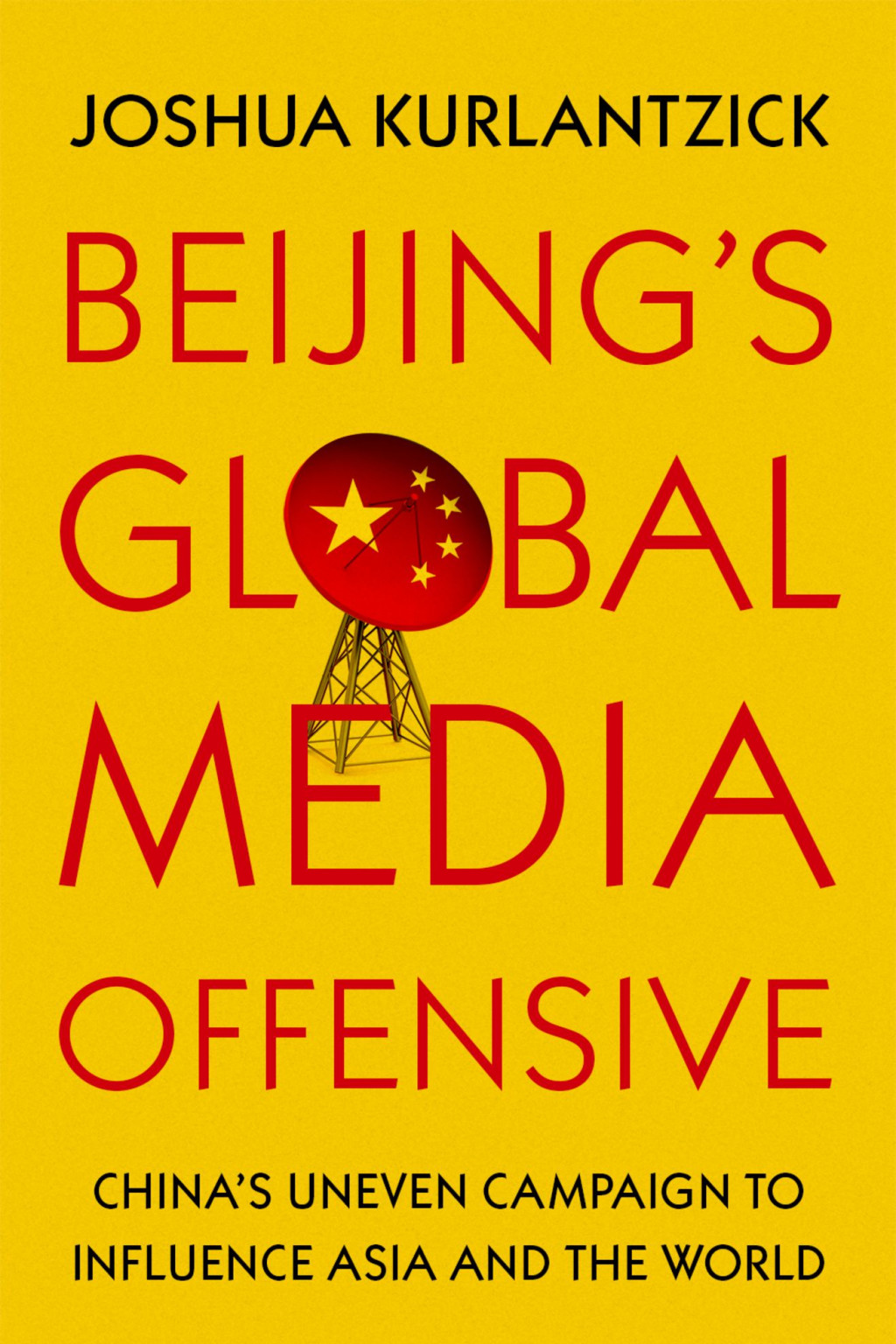
- Publisher
- Oxford University Press
- Release Date
- December 2022
- Pages
- 560
- ISBN
- 9780197515761
Since China’s ascendancy toward great power status began in the 1990s, many observers have focused on its economic growth and expanding military power. In contrast, most viewed China’s ability to project “soft power” through its media industries and its global influence campaigns as quite limited, and its ability to wield influence within the domestic politics of other countries as nonexistent. But as Joshua Kurlantzick shows in Beijing’s Global Media Offensive, both of these things have begun to change dramatically.
An incisive analysis of China’s attempt to become a media and information superpower around the world, and also wield traditional forms of influence to shape the domestic politics of other countries, the book shows China for the first time is actively seeking to insert itself into many other countries’ elections, social media, media, and overall politics, including that of the United States.
Kurlantzick focuses on how all of this is playing out in the United States, where Beijing has become the biggest spender on foreign influence activities, and also in China’s immediate neighborhood—Southeast Asia, Taiwan, Australia, Japan, and New Zealand—as well as in Europe and other parts of the world. He also traces the ways in which China is increasingly collaborating with Russia in their efforts to become more powerful global influencers via disinformation and other tools, but critically examines whether Beijing has enjoyed great success with these efforts to wield power within other countries’ domestic societies and politics and media.
While China has worked hard at becoming a media superpower, it sometimes has failed to reap gains from its efforts. It has undermined itself with overly assertive, alienating diplomacy and is now broadly unpopular in many countries. Still, Kurlantzick contends, China’s media, information, disinformation, and more traditional influence campaigns will continue to expand and adapt, potentially helping Beijing to wield major influence over other countries’ politics—and to export its models of political and internet control. China’s efforts also may not only help protect the ruling party; they may also help China build alliances with autocracies and undermine press freedoms, human rights, and democracy across the globe.
An authoritative account of how this sophisticated and multipronged campaign is unfolding, this book provides a new window into China’s attempts to make itself an information and broader influence superpower.
One of New China Books’ Best China Books of the Year
Reviews and Endorsements
A highly illuminating narrative and a remarkable articulation of how China builds sharp power around the world and wields influence especially in developing countries. The book is a must-read for anyone trying to understand China’s global information campaign.
Yun Sun, director of the China Program, Stimson Center
In Beijing’s Global Media Offensive, Joshua Kurlantzick has produced a lucid and penetrating investigation into the history, theory, and practice of China’s global influence efforts. He shows that behind a veil of ‘non-interference’ in other nations’ internal affairs, Beijing engages in a growing range of open and covert efforts to make friends, influence people, and shape foreign nations in ways supportive of its increasing global ambitions. Kurlantzick knows this terrain well, detailing the challenge posed by China’s global media and influence efforts, and what the democratic world can do in response. Essential reading for a dawning era of superpower competition.
Sebastian Strangio, Southeast Asia editor at The Diplomat and author of In the Dragon’s Shadow: Southeast Asia in the Chinese Century
This is a truly important book. Full of thoughtful insights and copious details, Joshua Kurlantzick has produced the missing link in our understanding of one of the most underappreciated geopolitical phenomena of our time: China’s use of media and information tools to present itself to the world in a benign light while undermining the United States and other liberal democracies. Kurlantzick leads the way for an important reconsideration of how political motivations, rather than economic concerns, are now the main driver behind China’s international engagement.
Joshua Eisenman, associate professor of politics, Keough School of Global Affairs, University of Notre Dame
Foreign information campaigns in and against the United States are nothing new, but China’s global effort is unprecedented in scale. This detailed assessment brings the threat into focus and suggests important ways to counteract it.
John Bolton, U.S. national security advisor (2018–19) and former U.S. ambassador to the United Nations (2005–06)