America at 250: The Best and Worst U.S. Foreign Policy Decisions, With Mary Dudziak and Christopher Nichols
This episode unpacks the best and worst foreign policy decisions in U.S. history.
Published
Host
- James M. LindsayMary and David Boies Distinguished Senior Fellow in U.S. Foreign Policy
Guests
- Christopher NicholsWayne Woodrow Hayes Chair in National Security Studies, Ohio State University
- Mary L. DudziakAsa Griggs Candler Professor of Law, Emory University
Associate Producer
- Justin SchusterAssociate Producer, Video and Audio
Editorial Director and Producer
- Gabrielle SierraDirector, Podcasting
Director of Video
- Jeremy SherlickDirector of Video
Mary Dudziak, Asa Griggs Candler Professor of Law at Emory University, and Christopher Nichols, Wayne Woodrow Hayes Chair in National Security Studies and Professor of History at the Ohio State University, sit down with James M. Lindsay to unpack a new CFR survey of historians on the best and worst foreign policy decisions in U.S. history.
To mark the 250th anniversary of the U.S. declaration of independence, CFR is dedicating a year-long series of articles, videos, podcasts, events, and special projects that will reflect on two and a half centuries of U.S. foreign policy. Featuring bipartisan voices and expert contributors, the series explores the evolution of America’s role in the world and the strategic challenges that lie ahead.
Transcript
LINDSAY:
How did the United States become the wealthiest, most powerful country in the world? History tells us that where we are today is in part the result of decisions U.S. leaders have made about America’s engagement with the world. Some of those decisions have bolstered U.S. interests and values. Others have not.
CBS NEWS: American and coalition forces are in the early stages of military operations to defend the world from grave danger.
LINDSAY:
As the United States celebrates its 250th birthday, it is important to look back on the consequential U.S. foreign policy decisions over the past two and a half centuries to understand the successes and to learn from the eras. In a new era of great power competition, the highs and lows of U.S. history might offer lessons on how to meet our current challenges, while avoiding the mistakes of the past.
From the Council on Foreign Relations, welcome to the President’s Inbox. I’m Jim Lindsay. Today I’m joined by Mary Dudziak, Professor at Emory University School of Law, and Christopher Nichols, Professor of History at the Ohio State University.
Mary, Chris, thank you for joining me.
NICHOLS:
It’s great to be here.
DUDZIAK:
Great to be here.
LINDSAY:
Now, Mary and Chris, I want to set the stage for our listeners and the backdrop to our conversation today is that the council conducted a survey of members of the Society for Historians of American Foreign Relations, asking them to identify and rank the ten best and ten worst decisions in U.S. foreign policy history. Running from the Declaration of Independence up to the end of the first Trump administration. Roughly 350 SHAFR members responded. Now I’m going to stop there. I’m going to ask you a question, Chris. What is SHAFR?
NICHOLS:
So thanks for asking. Thanks for having me here and to be part of the project. So SHAFR is a membership organization, the premier professional society for historians of U.S. or American foreign relations. Which means it’s not just limited to foreign policy, but foreign relations can entail transnational activities, peoples and groups, ideas, currency, trade. The membership organization is mostly U.S. based, but roughly 20 percent or so are international. So it’s scholars of U.S. or American foreign relations based in the U.S. and around the world who are historians.
Some are located in different kinds of departments. Some are in law school, some are in political science or composite departments. But all of them are dues paying members of this society. We meet once a year for a national conference and have a number of publications like Diplomatic History is the main journal of the field, for instance.
LINDSAY:
Okay. So Mary, you’re a past president of SHAFR. And I have to say when I approached you to ask you to serve on the advisory committee for this project, you expressed some skepticism. Tell me about it.
DUDZIAK:
Well, this survey is really interesting, but the idea of you sent out a long list of foreign policy decisions and asked everyone to rank them. And a couple of things, one that’s pretty overwhelming. How am I going to figure out what’s the best and worst?
LINDSAY:
I sent you the short list, by the way.
DUDZIAK:
But everyone will have different ideas about what matters in terms of what makes a foreign policy action good, what makes it bad? How do you compare massively different events with each other? And so I thought, what exactly are they trying to accomplish here and how is this going to turn out? And the result, I think, whether or not one is interested in how you rank decisions, the website provides a couple of things.
One is by creating these rankings, it opens up the opportunity for people to debate what the difference is between different kinds of leadership actions. For pedagogical purposes, it helps one sort of highlight what are the characteristics of the President’s action? What’s the nature of the problem that’s being solved or the problem that’s being created? And so it really creates the opportunity for talking about substantive issues in U.S. foreign relations history.
But one of the best things about what you all have done is the website that was created is full of details about the different decisions that are highlighted, whether they’re bad or good. So if a teacher is only interested in one thing, maybe it’s creation of the United Nations, or maybe it’s the forceful removal of the Cherokee Nation, for example. You can go to the website, there are often maps. There are sometimes audio or video materials so that your students can see the consequences of the decisions being made, or the process by which leaders approach them.
So you’ve basically created this website that’s usable for all sorts of purposes. Again, the best and worst, open up interesting debates. But even if one is not interested in that, there’s all sorts of great material in this website.
LINDSAY:
Well, thank you for the shout-out to the website, which you can find at cfr.org. And we have the precise URL on the show notes for this episode on the landing page for the President’s Inbox on cfr.org. And there is a lot of material that we gathered on the top 10, both best and worst decisions. So I think people want to know what’s on the list. So I’m going to ask you, Chris, to read to me in, I guess, ascending order, what were the best decisions?
NICHOLS:
Ascending order. All right.
LINDSAY:
Starting with number ten. Drum roll please.
NICHOLS:
I got you. I understand. Drum roll please. So there’s power and a surprise we’ve held out this long. All right. Number ten of the best decisions was the handling of the Cuban missile crisis in 1962. Coming up ninth was the Monroe Doctrine in 1823.
LINDSAY:
Back in the news these days.
NICHOLS:
Back in the news, very important. Number eight, the Act prohibiting the importation of slaves in 1807. 1808, taking action. The creation of the Bretton Woods system clocked in at number seven in 1944. The creation of NATO was sixth, happening in 1949. Coming in at number five, the Lend-Lease Act in 1941. And coming at number four, the Louisiana Purchase in 1803. Coming in at number three, the Treaty of Alliance with France in 1778. Coming in number two, the creation of the United Nations in 1945. And last but not least, the most important, the Marshall Plan in 1948, the best decision.
LINDSAY:
Mary, could you do me a favor and do the same thing for the decisions that are on the worst list?
DUDZIAK:
Yeah, it’s good for me to do worst because I like to focus on problems.
LINDSAY:
Okay.
DUDZIAK:
So according to the survey of SHAFR historians, the 10th worst decision ever made in U.S. foreign policy history was the bombing of Nagasaki, Japan in 1945. The ninth worst was the Gulf of Tonkin Resolution in 1964. The eighth worst was limits on Jewish refugees from Germany in 1939. The seventh worst was withdrawal from the Paris Agreement in 2017. The sixth worst was forcible removal of the Cherokee Nation in 1838. The fifth worst, Senate rejection of the Treaty of Versailles in 1919. Fourth worst, support for the overthrow of Iranian Prime Minister Mohammad Mosaddegh in 1953. The third worst, the Indian Removal Act of 1830. The second worst deployment of combat forces to Vietnam in 1965. And topping the list, the worst decision ever made so far in U.S. foreign relations history was the invasion of Iraq in 2003.
LINDSAY:
Chris, I want to come back to you because I think as people hear that list, something that’s going to jump out at them is the two mentions of U.S. policy toward Native Americans. And are going to ask, why is this on a list of foreign policy decisions? Help me explain why they are.
NICHOLS:
And I think that’s one of the things that really does stand out here. So at a top sort of 30,000 foot level, one of the things that we see in the survey results is experts in SHAFR looking at what foreign policy decisions embody fundamental ideals of American democracy, the best of them or the worst of them. And when you look at Indian removal policies in the 1820s and culminating the 1830s, you see a sort of halting series of decisions often through the Supreme Court and acts of Congress, but really driven by people on the ground in winding up with some pretty horrible outcomes.
So the 1830 Indian Removal Act is the first act by Congress to shift from legislating and thinking about indigenous peoples and groups as foreign nations or entities, and to treat them more as in terms of domestic policy.
LINDSAY:
Right. Under U.S. law, they have been regarded as sovereign nations. In fact, we signed treaties with indigenous peoples. And there is a room, quite lovely room in what is now the Dwight D. Eisenhower Executive Office building called the Indian Treaty Room to recognize that fact.
NICHOLS:
Precisely right. Yes. And so what you see in a series of cases, so called Marshall, John Marshall, Chief Justice John Marshall cases, a trilogy of them from 1823, 1831 and 1832, is this shift to treat them as, quote, domestic dependent nations. And what that meant was that no longer would this be the state department’s purview. No longer would this be more thought of in the kind of rough conceptualization of policymakers as independent sovereign countries.
But rather in Marshall’s parlance, which at the time he thought of would be benign and paternalistic, shot through with racism for sure, but he said that the U.S. would be as a guardian to award of tribes and the recognition of tribes in the 1831 case, the Cherokee Nation versus the U.S. And he also said that these would be domestic dependent nations. And so what happens though is driven by events on the ground, finding gold in Georgia, land prospecting and speculation, and people moving west, you have first as enshrined in the Indian Removal Act by Congress.
And then as we see later in the list on number six, the forcible removal of the Cherokee Nation, a push through the Jackson administration, particularly to get rid of these people and create open territory of areas which had been given to them as sovereign. Given in this paternalistic sense from the United States, now taken away and forcibly removed. And in the Trail of Tears, you see something like 4,000 of 15,000 die, right?
So this is catastrophic consequences and these are a series of choices in this moment that shift the sort of foreign policy dimensions of the treatment of Native Americans to something much more domestic in that sense.
LINDSAY:
Right. And it reflects the United States repudiating its solemn treaty obligations, which is not inconsequential. Mary, as you look at these rankings, what lessons do you take from them? What message do you think SHAFR historians are communicating with their choices?
DUDZIAK:
I don’t think that we can look at these choices and discern a clear message that SHAFR historians are trying to give the world about the best and worst. And on some level, let me say a little bit about what these kinds of decisions, these particular kinds of decisions and opinions about them can illuminate and what they cannot.
LINDSAY:
Fair enough.
DUDZIAK:
Because there’s one thing that would be nice to be able to capture, but just doesn’t present itself in this kind of a survey, and I think is tremendously important. So if I was thinking of, what do I wish we could see and what we don’t do, we see, here’s what it is. In order to create this kind of a survey, you’ve got to have particular points that then these are the decision points, please vote on them. And what then is not present is things that happen over time.
And so one just tremendously important example that happens over time across presidencies, and isn’t combined to a particular moment is how is it exactly that the United States polity, the country, gave up the democratic process of the people’s representatives having a say in whether the country goes to war.
Now, how did that happen? That’s at least a century long story. It’s a story that involves not just presidents and what presidents did, Congress and what Congress did. It also involves how armed conflict changes over time. It also involves the relationship between armed conflict and crisis and electoral politics. Because often decisions are made in light of a president’s wanting to get reelected or elected in the first place.
And it also, most importantly, misses how things build upon each other over time. So Truman decides to go to war. Yes, there’s the UN, but there’s still a requirement in the U.S. Constitution of Congress playing a role in declaring it, regardless of the United Nations. And he doesn’t do that. He won’t even call it a war. And that-
LINDSAY:
Call it a police action.
DUDZIAK:
Yeah.
LINDSAY:
And in Korea, of course.
DUDZIAK:
And in the Korean War. And then it becomes a precedent. It becomes a legal precedent that is drawn upon within the executive branch to build unilateral presidential power. So this happens across decades through different presidents. So many of the things that happened, I think, that were highly unfortunate are things that involve the accretion of power or the building of bureaucracy. And that involve, if we think about sort of the military industrial conflicts and its overgrowth. If we think about the role of the CIA, for example, which isn’t really reflected here, and how the CIA becomes militarized. And the CIA’s role in Laos, which one of your CFR colleagues has written brilliantly about.
LINDSAY:
Josh Kurlantzick.
DUDZIAK:
Yes.
LINDSAY:
A Good Place To Have A War, is the title.
DUDZIAK:
Yes. Which is a brilliant book. And so things like that, which are tremendously consequential, end up being part of a process that … And we don’t see that … Understanding those processes is just a different project than-
LINDSAY:
Right. Points in time make it very hard to see sort of trends in time.
DUDZIAK:
Absolutely.
LINDSAY:
Chris, I want to come to you and ask a variant of the question I asked Mary. Which is when you sort of look whether at the top ten best decisions as ranked by SHAFR historians or the ten worst, do decisions have commonalities that you see? Do they say something to us about decisions that either work out well or work out poorly?
NICHOLS:
Two or three things stand out in this list to me. I mean, one top line takeaway that I think is influencing how SHAFR experts made these decisions is our current moments celebration by lots of folks across politics of the mid-century. And the structures of the mid-century that gave order to the world system in the Cold War and the post-Cold War.
LINDSAY:
So the world created after the end of World War II.
NICHOLS:
Right. And planned even in the course of World War II. So the creation of the UN, the Marshall Plan, Lend-Lease, creation of NATO, creation of the Bretton Woods system, those are all in the top ten. And what is a commonality that those all share that is clear to anyone listening to this podcast is a kind of multilateralism in which the U.S. is engaged often on its own terms and for its own reasons. But with lots of partners building something greater than what any one nation state is up to.
And performing a kind of visionary role that lots of leaders of the U.S. and people around the world for centuries had been aspiring to in terms of finding a commonplace for adjudicating international conflict, dealing with human rights issues, natural disasters. Which heretofore had floundered in different ways in different places. And it gets to what Mary was mentioning too and thinking about unilateralism. That as a contrast to the worst list, some of the worst things here, the invasion of Iraq, for instance, stands out in terms of the coalition of the so called willing, right? It wasn’t a UN action, it wasn’t sanctioned
LINDSAY:
The UN refused to actually endorse. This UN Security Council explicitly refused to endorse it.
NICHOLS:
Precisely. Case in point, as a direct comparison, say to the Gulf War, right? Where a multilateral action in George Bush’s time, George H.W. Bush’s time and a new world order system where you actually saw Russian troops, shoulder to shoulder with Americans.
LINDSAY:
Or you need to look at the Vietnam War, most American allies tried to communicate to President Johnson, this was a bad idea and he didn’t want to listen. Particularly the Canadians and the British.
NICHOLS:
Yep, precisely. Right. And so you see that the top two worst. And then you also see to some extent unilateral rash interventionism in the case of the overthrow of the elected leader of Iran in 1953, Mohammad Mosaddegh. So some of this is there very much the sort of contrast between multilateralism, engagement or partnership, if you will, and a kind of unilateralism.
LINDSAY:
Mary, I want to ask you to expand on a point that Chris made in terms of the role of human rights. And I know that we tend to think of human rights as something that Jimmy Carter became concerned of in the late 1970s. But clearly in the aftermath of World War II, human rights, and particularly human rights at home, became a big issue for the United States, given segregation and the rest. And the Soviet Union often used that against the United States. Sort of talk me through that.
DUDZIAK:
Yeah. And there, just for clarification, if we think about human rights, often folks will think about international human rights. And what happened in the context of the Cold War especially, domestic U.S. civil rights had an impact on U.S. foreign relations. And essentially in the aftermath of World War II and the move up to independence movements in Africa and other parts of the world, the United States and in the developing Cold War, the U.S. was concerned about wanting to appeal to the peoples of the world so that they would align themselves with the United States and not with the Soviet Union.
And sometimes this was for practical reasons like wanting basing rights in Kenya, for example. Wanting to sort of have a presence, a global presence, and wanting to have positive foreign relations with all these new countries. And just one example, when African countries after independence in Africa, African countries would send new diplomats to the United States and they’d have to present their credentials to the president.
And so in the Kennedy administration, they’d come into New York, to the UN, they’d drive down to Washington DC, along a highway in Maryland. Stop to get a cup of coffee and get thrown out of a diner because the diner was segregating customers, blacks couldn’t come in. And President Kennedy’s response to this was, “Why are they driving? They should fly.” And finally, Kennedy’s aids convinced him that, no, we actually had to do something about this discrimination. But this is just one example in the Little Rock crisis when nine African Black-
LINDSAY:
This is 1957. Little Rock, Arkansas.
DUDZIAK:
Yeah, 1957, ‘58, Black school children were being escorted by troops through a white mob because a court had ordered the desegregation of the Little Rock schools. This was an international news story. It was covered in The Times of India every single day. And diplomats stationed around the world worried about what this was doing to other countries’ views about the United States. Whether they would ally themselves with the United States.
So across time, beginning in the ‘50s with the Brown vs. Board of Education case, some folks in the State Department came to understand that starting with the desk office, starting with folks stationed around the world, that the United States could not appeal to peoples around the world if the United States did not clean up its own problems. Stopped treating people of color the way that they did. And so some level of amelioration of at least the worst … Also, the Soviet Union used this as a very effective propaganda theme against the United States.
So yes, beginning in the Truman administration moving forward, diplomats came to understand that racism by the United States, not just against diplomats, but against American citizens was undermining U.S. foreign relations.
LINDSAY:
Well, that obviously puts the focus on how foreign policy can influence domestic politics. And I will also say, there’s a common phrase that history doesn’t repeat, but it rhymes or it echoes. And imagine many of the issues you’re talking about right now, at least from my travels overseas are resonating today, given issues we have on immigration and the rest.
DUDZIAK:
No kidding.
LINDSAY:
Yeah. So Chris, I want to ask you sort of as a historian, you do a lot of great work, particularly on, I guess, early 20th century. Wrote a great book, you want to plug it? Promise and Peril?
NICHOLS:
Promise and Peril: America at the Dawn of a Global Age.
LINDSAY:
I want to actually though push you further back in history to the founding.
NICHOLS:
Happy to go back. I’m currently teaching on the American Revolution. Ask me anything.
LINDSAY:
And I think that’s fascinating. That’s what I want to ask you. Just tell me a little bit about the Treaty of Alliance with France 1778. I suspect most Americans aren’t particularly well versed in the Treaty of Alliance with France.
NICHOLS:
They are not, I’m sure. Although a lot of people are watching the Ken Burns series these days.
LINDSAY:
Yeah, good point.
NICHOLS:
So I think they’re getting a fairly good history from him of that and judging from the numbers of students in my class, a lot of people are interested. So it comes in as third on the best list. And if I had had to guess when I first got involved in this with you, Jim, seven years ago, it would have been first. Because I would have thought historians would put the founding first as just some basic default setting. To go back to the founding, that’s essential. You wouldn’t have best and worst decisions if you didn’t have a U.S., right? But the Marshall Plan, the Creation of the UN clock in at the top two.
So the Treaty of Alliance with France, it comes at this critical point, 1778, right after the Battle of Saratoga. There’s actually two battles, not one, September and October, that show that the Continental Army can hold its own against the Red Coats and their Hessian auxiliaries. And that quite likely the Continental Armies will be able to fight all the way through to victory according to French observers, Spanish observers, and others.
In 1775, the Continental Congress had sent over some diplomats to France. They’ve been advocating for a union and the French are giving covert aid, but they’re not yet ready for a formal alliance. And the top line takeaways without the alliance with France, there would not have been the naval capacity or the global level of the conflict to have won in the way that we see the war play out.
LINDSAY:
Well, because one of the things Britain had to do in response to French involvement was divert forces to-
NICHOLS:
To Gibraltar-
LINDSAY:
… and to the West Indies.
NICHOLS:
India. Right. The West Indies, the French Navy is very intent on taking over British possessions in the Caribbean, the sugar plantations and the like.
LINDSAY:
And General Cornwall gets penned in at Yorktown because Admiral de Grass of the French Navy is offshore.
NICHOLS:
Precisely. That’s actually the first major successful engagement of the French Navy, and that’s the end of the war in 1781. But without that, most military historians would say, “We can’t know how the course would play out,” but that was a decisive move. Now, again, zooming out of these decisions and thinking about what they signify, that is a binding piece of collective security as we would talk about it in our nomenclature today. And it’s not until the founding of NATO in 1949 that the U.S. again enters into one of those.
And I think it’s significant that on the best list, both of those are there because these kinds of efforts where the U.S. pledges to help others as it has helped itself, and often disproportionately the U.S. benefits from these kinds of treaties, is significant to our experts, to how foreign policymakers think.
And yet, it also comes in this moment of 1778 of the sort of Washington and Jefferson injunction against entangling alliances. Which we get caught up in and thinking about this early period. So the Treaty of Alliance with France also could have gotten the U.S. into a lot of trouble in the Napoleonic Wars and the French Revolution. And there’s a series of negotiations in the 1790s, which that’s a whole nother podcast, about how and why the U.S. gets out of that.
But it brings up one other really interesting question that I love to talk to students about, and it’s possible Mary will have an answer that’s more legal about this. But the question of the Treaty of Alliance for Jeffersonians and Hamiltonians is, are treaties with nation states or peoples? That is, are they with the leadership or the regime of a nation state? Or are they with the people that occupy the physical space known as a particular nation?
And that certainly was a question Jefferson thought that whoever ruled France, the U.S. owed something to the French. And Hamilton did not agree with that. Also was more pro British. But as you go through the next several centuries, behind these best and worst decisions is that kind of question. Who are the U.S.‘s real allies? Who counts as a leader the U.S. should overthrow or not? What kind of form of government should the U.S. support?
LINDSAY:
Well, that leads us to the neutrality proclamation issued by President George Washington in 1793, which essentially tore up the Treaty of Alliance with France. And there’s a whole rich debate in the 1790s over that. Mary, I want to give you a chance to answer Chris’s question if you would like to. But I also have a question to ask you about one of the issues on the worst list. And that is about the bombing of Nagasaki. Because I imagine number of people hearing us would say, “What about Hiroshima that happened first?”
DUDZIAK:
Well, of course, from my perspective, the bombing of Hiroshima was also a catastrophically terrible decision.
LINDSAY:
And it finished fifteenth in the ranking, I should point out.
DUDZIAK:
Yeah. But I think the reason that the historians filling out the survey thought, and I agree with this, that Nagasaki is a worse decision than Hiroshima, is that you’d already had this just catastrophic destruction in Hiroshima. There wasn’t very much time between Hiroshima and Nagasaki. There also wasn’t a robust decision making process between Hiroshima and Nagasaki. They didn’t stop and say, “Hey, given the numbers of people and the massive destruction that we have just accomplished, let’s give it a little time and see what the response from the Japanese government is going to be. Let’s wait.” No, they just went right ahead and bombed again.
LINDSAY:
They actually moved it up two days because of forecast of bed weather.
DUDZIAK:
Because of weather.
LINDSAY:
So rather than being August 11th, it was August 9th.
DUDZIAK:
Right. The process that we think of happening now, if you watch, I forget the name of the recent film on this, Control Room. That there’s-
LINDSAY:
House of Dynamite.
DUDZIAK:
House of Dynamite. That there’s an emergency, and then there’s going to be a decision making process that the president then makes the call, et cetera. That kind of process didn’t happen. It wasn’t in place. There wasn’t really a process. The military thought it was their job to … There was a weapon.
LINDSAY:
They had two bombs.
DUDZIAK:
Weapons are for use. And also the scientists would get different information from the two bombs because they were different kinds of bombs. So there were all sorts of reasons that from their perspective, they wanted to use the weapon. And of course, the president and military leaders wanted to win the war against Japan. But for heaven’s sakes, given the massive humanitarian impact of an atomic weapon, there really wasn’t a good enough reason to not Hiroshima.
NICHOLS:
Right. I think there’s another part of the answer there too, which is that we now know a lot more about the dissent within the Japanese Imperial High Command. And that there was virtually a civil war going on within the sort of more peace camp and the Hirohito folks. And so I think historians probably have a counterfactual in mind, which is implicit in what we’re saying, but I’m just surfacing. Which is that given more time, it would’ve been less and less justifiable to have used the bomb.
Because Japan’s peace group was more likely to seek some kind of, not quite unconditional surrender, but something awfully close. And they were becoming increasingly empowered after the first use of a bomb. And so I think that’s why it rises up in that way.
LINDSAY:
I want to close with the broader question of what we can learn from remembering history and exploring history. And I ask us to go back to the sort of underlying rationale of this project is I knew at the end of the day we were going to get a list. Not because I value a list in and of itself, but I know that lists create an invitation to have a conversation, and hopefully a productive conversation. And maybe just given my biases toward liking history, I wanted people to sort of think about the … Particularly now we’re at an inflection point in American foreign policy, I think it is safe to say, about what is the nature of America’s relations to the rest of the world?
What principles or assumptions should we operate on? And we see that periodically over the course of American history. The founding, you certainly have it at the turn of the 20th century, World War I, obviously World War II, post Cold War era again today. Now there’s an adage attributed to the Harvard philosopher, George Santayana, that those who can’t remember the past are bound to repeat it. And of course there’s Murphy’s corollary, which is those who remember the past find some other way to mess up.
But I’d like to sort of hear from you your sort of thoughts about what we can take away from history as we think today as citizens of the United States about our role in the world. Want to go first?
NICHOLS:
Happy to. So one, I would say I’m an unabashed advocate for the importance of historical knowledge, humanistic-
LINDSAY:
Well, that makes me feel better because you are a history PhD.
NICHOLS:
Definitely, yes. But I think that we really … So there are some professional historians who would say it’s not necessarily our job to distill the complicated paths for wider publics. And I respect those folks‘ views, but I think, I feel like it’s incumbent on me and a number of us who are fortunate enough to have jobs and have this knowledge and have a platform to talk about these issues. And I think some of the broader historical takeaways from the survey invite great debate, as does the website, which we’ve been talking about.
And they bring up questions that animate my own work, which is about how are the ideals of America manifested in foreign relations? Often very imperfectly, sometimes transcendently. And the decisions themselves provide an entry point to look at, kind of unpack, excavate, and dive into what all is going on in that.
I think another piece of this that we can learn is that while some of the decisions here are like the Cuban Missile Crisis, a whole bunch of really smart, mostly men in a room making a decision. Going through policy planning, and thankfully averting a nuclear war, that’s one way of understanding the best and worst decisions.
LINDSAY:
But that’s also in contrast to Hiroshima or Nagasaki. This is a case in which the president both set up a process and he also took his time because the initial conversations over Cuba were to go to use military force, which would have been a very bad idea given that the Soviets had tactical nuclear weapons in Cuba. Sorry, I’m taking off …
NICHOLS:
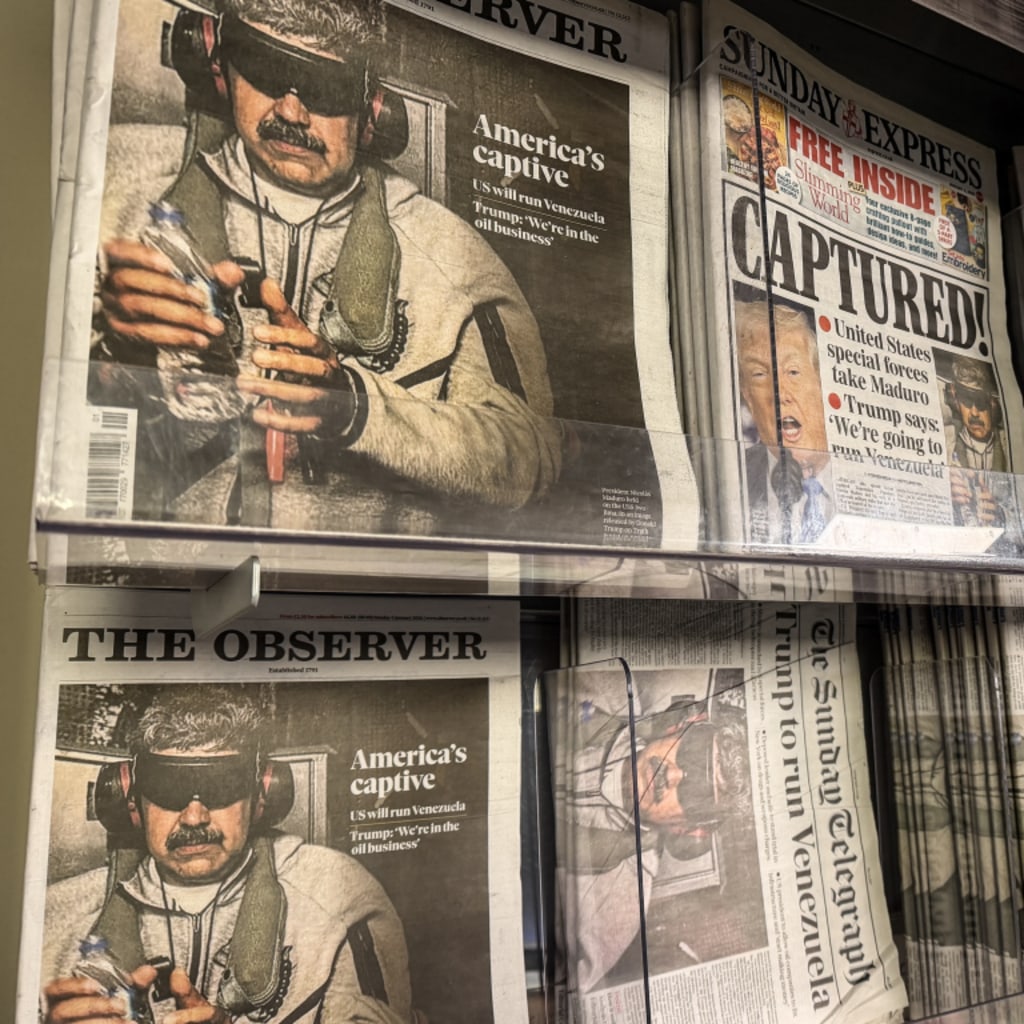
Totally. No, I agree with you. And one lesson there is take your time, have a process, have strategy. What we’ve seen, for instance, in U.S. and Venezuela lately seems to be at best an ad hoc policy put together on the fly. And that clearly isn’t a methodology that has worked well if you’re looking at our best and worst list.
But another piece of it that I want to surface for listeners to think about is what I like to talk about the inter-mestic, the international and domestic, where they intersect. Which is often where you see values most in operation. And one thing that I was thinking about in preparation for this conversation was slightly down the list at twelve on the best list and nineteen on the worst list are two major immigration acts. Twelve on the best list is the 1965 Immigration Act. Which opened up worldwide immigration and certain addenda to that were policies like the Diversity Visa Lottery in Africa, which was truly a lottery and has transformed lives and changed attitudes towards the U.S.
And at its worst, the 19th worst, 1924’s draconian National Origins, Reed Johnson Act, which really slowed to a trickle all immigration into the country. In those two moments, and then in another moment, the withholding of visas to Jews between 1938 and 1944, who are fleeing Nazi tyranny, you see values set in motion in one direction or the other, literally at the borders. Who’s allowed in and who isn’t? Who gets to call themselves an American? What are agents of the state, whether they’re diplomats or presidents or border patrol agents, how does that operate?
And I think for me, that’s one … The essence of the debates is about what are the ideas at stake and how are they instantiated in policy? And each and every one of these decisions, even the ones that are very low on the list, invites us in to have a conversation about national ideals and how history maybe can show us a better path to the future. Or at least ward off some of the worst decision making that we’ve seen.
LINDSAY:
Mary, how do you think about the role of history in helping us be citizens?
DUDZIAK:
Yeah. Let me answer that question in a different way and actually be quite presentist, if that’s okay. At this particular moment in American history, there’s never been a more important time, I don’t think, at least in my lifetime, to talk about what American values are. What the role of the United States is in the world. What can be accomplished with American power. At this point, for folks viewing this video, we’re in 2026. We’re in January 2026, and things are bad out there. And it’s a point when, in many communities, even debating some of the things we’ve been talking about today, especially when we’re talking about race and indigenous groups and capturing the histories and bringing that into the broader American story and not cutting it out, this is a time of crisis in American history.
It’s a time of division. And it’s a time when it’s so important for people across differences in ideology and differences in experience to be able to talk about what we can be as a nation. What we can accomplish as a body of people. What is in our interests. I mean, seriously, just what is in our interest as a nation in terms of where we might want to be tomorrow, next month, and five years down the road.
And so at a time when things are so fraught, and at a time when free speech is under assault, talking about history can sometimes provide something of a safe space. A place where folks across differences can learn from each other, and have conversations about values that aren’t all preset by what’s going to happen tomorrow.
So I think that history is always important and we learn things by following government actions over time and see how things build up, for example. But it’s also a way of educating students and talking to each other about what our nation can be, and what kind of path forward is sustainable for moving hopefully towards a more peaceful future.
LINDSAY:
On that note, I’ll close up this episode of the President’s Inbox. My guests have been Mary Dudziak, Professor of Law at Emory University School of Law, and Christopher Nichols, Professor of History at the Ohio State University.
Mary, Chris, thank you very much for joining me.
NICHOLS:
Thanks so much for having us.
DUDZIAK:
Thank you.
LINDSAY:
Today’s episode was produced by Justin Schuster with Director of Video, Jeremy Sherlick and Director of Podcasting, Gabrielle Sierra. Production assistance was provided by Oscar Berry and Kaleah Haddock.
Mentioned on the Episode:
Christopher McKnight Nichols, Promise and Peril: America at the Dawn of a Global Age
Joshua Kurlantzick, A Great Place to Have a War
Opinions expressed on The President’s Inbox are solely those of the host or our guests, not of CFR, which takes no institutional positions on matters of policy.