Nukes Without Limits? A New Era After the End of New START
New START expired on February 5, ending decades of U.S.-Russia cooperation to reduce each country’s nuclear weapons on alert. Four arms control experts provide insight on whether the end of the treaty could trigger an arms race or risk other miscalculations.
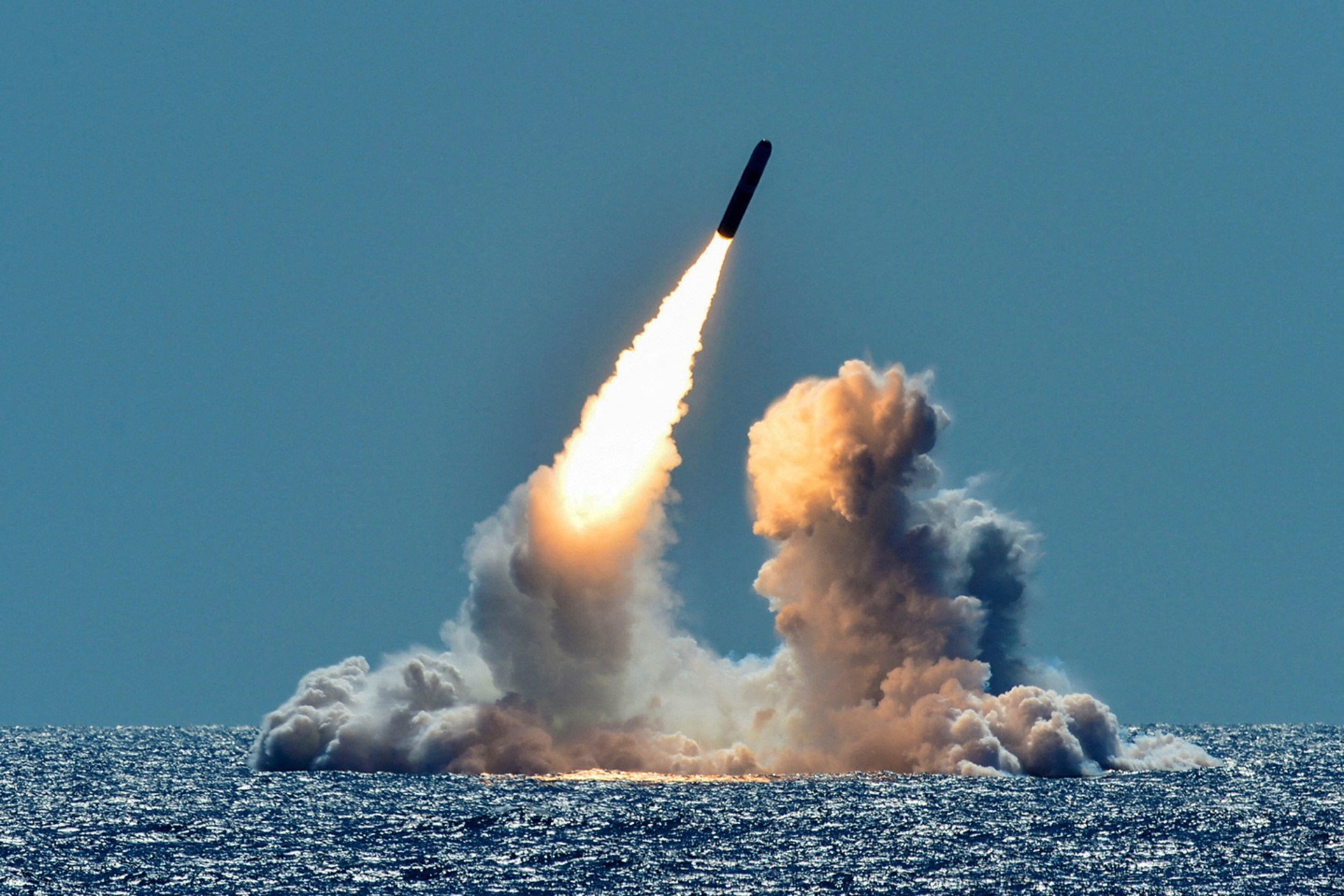

The last remaining treaty between the United States and Russia limiting nuclear weapons expired on February 5, 2026. It marks the end of an era of arms control and limits on both the size and status of U.S. and Russian nuclear weapons, which the treaty capped at 1,550 deployed strategic systems each.
However, reports that the two superpowers have agreed to keep talking and to develop a follow-on agreement bring optimism. It will take hard, detailed work, but the United States and Russia could find ways to maintain some degree of predictability. Yet even if a mutually beneficial political agreement can be reached, both Washington and Moscow seem poised to deploy more nuclear weapons, risking an arms race.
At their best, arms control agreements provide predictability and help the parties involved avoid dangerous and costly military buildups. New START did both until on-site inspections ceased during the COVID-19 pandemic and never restarted. The treaty was designed for only one five-year extension, which President Joe Biden and Russian President Vladimir Putin agreed to in 2021. Russia’s actions since, including its full-scale invasion of Ukraine, directly contributed to New START’s sputtering conclusion. But this end of an era of arms control does not impede future negotiations or commitments between the world’s two nuclear superpowers—or even preclude applying the lessons from decades of cooperation between the United States and Russia to U.S. relations with China.
As New START expires, Erin D. Dumbacher, CFR’s Stanton nuclear security senior fellow, spoke with four arms control negotiators and nuclear policy experts to analyze what a world without limits on U.S. and Russian nuclear weapons could look like and where U.S. foreign policy on nuclear weapons issues should look next.
Trust through verification
Arms control can be a “cooperative bright spot” in rivalries. New START, negotiated in 2010 under U.S. President Barack Obama and Russian President Dmitry Medvedev, provided stability on nuclear weapons issues while other uncertainties in the U.S.-Russia relationship persisted. The treaty set limits for deployed ballistic missiles and bombers at 700 each, strategic missile launchers at 800 each, and the number of nuclear warheads the United States and Russia could deploy to 1,550 each. The logic held that, with enough nuclear weapons to hold each other at risk already, the two countries could meet their national security aims under these caps.
Austin Long, scholar at the Massachusetts Institute of Technology and former deputy director for strategic stability at the Pentagon, believes those limits were built for another time. Today’s security environment is “night and day” compared to the one when the treaty was negotiated, he said, and not just because of Russia’s increasingly aggressive foreign policy since 2010. China’s nuclear arsenal is expanding rapidly, and North Korea now has a viable, if small, force to deter its adversaries.
What would the world look like without [the New START agreement]?
Jane Vaynman
Former Senior Advisor in the Bureau of Arms Control, Deterrence, and Stability at the State Department
As other treaties like the Open Skies, Intermediate-Range Nuclear Forces, and Anti-Ballistic Missile treaties concluded or were undermined by Russian actions, New START represented a mutual commitment to avoid costly arms races. This formal commitment in a post-Cold War environment allowed for accountability, said Jane Vaynman, a scholar at Johns Hopkins School of Advanced International Studies and former senior advisor in the Bureau of Arms Control, Deterrence, and Stability at the State Department.
“Arms control agreements as negotiated international institutions add a layer that goes beyond informal understandings” so that “when someone deviates … or cheats, for example, there’s an understanding that that matters,” she said.
To verify compliance, each country received on-site access to one another’s nuclear weapons military sites, committed to not interfere with one another’s satellites and other intelligence collection about nuclear forces, regularly traded data, and committed to use a treaty dispute resolution mechanism, the Bilateral Consultative Commission (BCC). The verification measures in the treaty were robust. Each detail was carefully negotiated by experienced diplomats and military service members, even to the level of agreeing that inspectors can bring flashlights and “two rolls of adhesive tape.”
Both the United States and Russia have “been accustomed... for many years now to having our strategic offensive force deployments laid bare to the other side,” said Rose Gottemoeller, the lead U.S. negotiator of New START, former Director General at NATO, and Research Fellow at Stanford University.
The Bilateral Consultative Commission is an all-important mechanism and... all of our nuclear arms control treaties have had them.
Rose Gottemoeller
Former Deputy Secretary General at NATO and lead U.S. negotiator of New START
Before the COVID-19 pandemic, the two sides conducted eighteen visits per year to better understand and validate data. But Putin halted access to on-site inspections in 2023, leading some to argue the treaty was already a “zombie” without verification. To some, its expiration is just a period at the end of a sentence that has already been written.
The treaty’s absence will be felt within both intelligence communities even more in the coming years. The nuclear limits, commitments not to interfere with one another’s National Technical Means (NTM) [PDF], also gave Washington and Moscow confidence that the other was not attacking their ground and space-based systems that would provide early warning of attack. As both the United States and Russia digitize their nuclear command and control systems—the very systems that guard against misuse while standing ready to launch nuclear weapons promptly—the treaty helped to safeguard against uncertainty and risks of miscalculation. Now, if an early warning satellite detects interference or is blinded, intelligence analysts could suspect that an attack is underway.
The onsite inspections of New START have [helped] the intelligence community to understand Russian forces, force structure, etc.
Austin Long
Former Deputy Director for Strategic Stability at the Defense Department
“The onsite inspections of New START have [helped] the intelligence community to understand Russian forces, force structure, etc. And the flip side is true for the Russians,” said Long. Open-source researchers can watch to see if the Russians take steps to reduce the transparency of their nuclear forces, but the treaty’s expiry brings more uncertainty for exquisite NTM systems.
Inspections under prior agreements were due to expire in December 2009, just as New START negotiations were underway. Prior arms control agreements “were giving confidence to the intelligence community,” said Michael Elliott, who served as the chairman of the Joint Chiefs of Staff’s representative to the New START negotiations. Without inspections, he warned, intelligence estimates will become less precise and combatant commanders could become more cautious, causing them to “probably ask for more stuff. And more stuff equals demand on the budget.”
When the intelligence community confidence starts to erode [without a nuclear treaty], their estimates will grow from narrow estimates of what the force is doing to much larger estimates—a range of possibilities.
Michael Elliott
Former Chairman of the Joint Chiefs of Staff's representative to the New START Negotiations
A slow and steady arms race
New START brought the total number of deployed nuclear weapons to its lowest level since the early Cold War period. Without a formal treaty in place, both the United States and Russia are free to deploy more strategic weapons—and all signs point to a modest upload and more deployed nuclear weapons in the coming years. An action-reaction cycle will be hard to avoid.
One of the first moves the U.S. military will likely make is to reopen previously closed missile tubes on the existing Ohio-class submarines. President Donald Trump’s One Big Beautiful Bill Act designates $62 million for this purpose, which could take place as each submarine returns to port from patrol. The United States could also begin to “upload” additional nuclear warheads onto existing platforms.
Within a decade, the United States could, by some estimates, take weapons out of stockpile and deploy an additional 1,900 nuclear weapons. Russia holds even more warheads in reserve than the United States. So it would not be difficult for the Kremlin to also upload additional warheads onto its nuclear delivery systems and continue to explore its so-called exotic capabilities that are designed to evade missile defenses.
“The end of the treaty gives the U.S. opportunity, but it doesn’t mean the United States has to take it,” said Long. “What I would advocate for are changes. … We have to address the growing number of targets in China as its force expands. And so, I would advocate for a modest so-called upload, which is to put more warheads on existing missiles.”
The United States can put more warheads on some of its intercontinental missiles that are based in silos on land, or it can put more on submarine forces.
Austin Long
Former Deputy Director for Strategic Stability at the Defense Department
Once the U.S. Senate ratified New START in 2010, the United States could anticipate that its only nuclear peer would also hold its number of deployed strategic forces constant. This understanding allowed the United States to plan, which is particularly important when nuclear weapons and delivery systems remain in the force for decades [PDF]. For the United States, awareness and access to Russian strategic systems brought confidence as the executive and legislative branches designed a broad modernization program to update all three legs of the U.S. nuclear triad: building the new Columbia-class submarines, a new intercontinental ballistic missile program known as the Sentinel, and new bomber aircraft in addition to funds recapitalizing nuclear weapons production. Since the program was designed during the Obama administration and New START came into force, Congress has added a submarine-launched, nuclear-tipped cruise missile to its demands of the defense industrial base. Most programs are already over budget and late and, as defined today, will cost about $1 trillion over the next decade.
Adding more warheads to U.S. nuclear delivery systems would take time and resources, Elliott explained. “The thing I think that the Pentagon is probably spending a lot of time thinking about is [that] you don’t want to compete—do anything that’s going to compete with the recapitalization of the replacement systems.”
New START set the upper limits for U.S. forces and gave Russia the assurance that even with increasingly advanced defense technology, the United States was not provoking an arms race. Additional nuclear weapons and their delivery systems are costly, but if the U.S. uploads or grows its force, it would be difficult to stop the Russians from doing the same. The Trump administration paves the way for expanding the U.S. arsenal in its new National Defense Strategy, calling for U.S. nuclear forces to “modernize and adapt.” New START allowed the military to spend elsewhere.
But now, any nuclear force changes could be perceived as requiring a response. “What I don’t understand,” said Vaynman, “is how you believe if you increase your number that Russia and China don’t also increase their number, and you’re back with the same problem that you started with.”
What I don’t understand is how you believe if you increase your number that Russia and China don’t also increase their number, and you’re back with the same problem that you started with.
Jane Vaynman
Former Senior Advisor in the Bureau of Arms Control, Deterrence, and Stability at the State Department
Not the end of arms control
The Trump administration seems open to a political commitment that would maintain the New START limits for a time, allowing negotiations with Russia to continue. Active communications channels can be valuable tools for avoiding misinterpretation.
U.S. priorities in new bilateral negotiations should include, in addition to limits on and verification of strategic systems:
- addressing non-strategic nuclear weapons—so-called battlefield or theater nuclear weapons with smaller yield but radiological effects;
- continued, mutual agreement not to interfere with NTM;
- Russia’s “exotic” delivery system development;
- a restart of data exchange that goes beyond standard launch notifications that the United States and Russia already share with one another; and
- a standing dispute resolution mechanism akin to New START’s BCC to raise issues regularly.
The top priority for the United States coming to the negotiating table has to be getting constraints on nonstrategic nuclear warheads as we promised and conveyed the resolution of ratification of the New START treaty.
Rose Gottemoeller
Former Deputy Secretary General at NATO and lead U.S. negotiator of New START
Any political agreement would not allow the United States to validate Russian compliance without onsite inspections, however. Some experts say there is no utility in extending the upper limits on deployed systems without verification, while others believe the president could get a legally binding treaty that allows for the exchange of sensitive, classified information as part of inspections.
To achieve depth and nuance in the negotiations, political negotiators will need to bring the strength and experience of the U.S. government to bear in managing nuclear issues with Russia. Experienced diplomats, military officers, and civilian staff with expertise from organizations like the Defense Threat Reduction Agency should be part of any negotiation teams, said Gottemoeller.
“I would really urge the administration to think about bringing the real technical experts to the table for these rounds of more technically oriented discussions,” she said. “As hard as you try to put every detail down, so the inspectors know exactly what they’re allowed to do… it’s inevitable that you have disagreements from time to time or simply the treaty isn’t clear on a particular technical detail.”
“If you have experienced people, they’re teaching it to the next generation and so on. That train has been broken now,” Elliott added. “It doesn’t mean that it can’t be rebuilt, but one of the things I learned early is that relationships really matter a lot.”
If you have experienced people, they’re teaching it to the next generation and so on. That train has been broken now. It doesn’t mean that it can’t be rebuilt, but one of the things I learned early is that relationships really matter a lot.
Michael Elliott
Former Chairman of the Joint Chiefs of Staff's representative to the New START Negotiations
U.S. Secretary of State Marco Rubio seeks an agreement that include China given their “vast and rapidly growing stockpile.” But calls to ensure the Chinese join any future U.S.-Russia arms control measures might be equivalent to a “poison pill” for a deal with Moscow. Chinese nuclear forces [PDF] could reach parity with U.S. nuclear forces by 2035, but the Chinese have so far shown little interest in formal, quantitative limits. Some experts recommend separate bilateral negotiations instead of a trilateral approach.
As economic, technology, and military competition between the United States, China, and Russia proceeds, finding ways to reduce nuclear risks may need a new, or retro, approach that dates to the early Cold War period. Future arms control agreements may not resemble recent agreements.
“I do not believe arms control is dead. It remains a useful tool; it is a tool just like other tools of foreign policy that we have,” said Vaynman.
“Competition is expensive. … I would hope nobody really wants a massive nuclear war,” she added. “The perception that ‘this aspect of the competition is really not good for any of us’ is where arms control comes up and it becomes a tool. I see [nuclear arms control as] very possible, with U.S.-Russia, with U.S.-China, depending on how those dynamics unfold.”
Now, the only legally binding mechanism to restrain nuclear weapons around the globe is the Nuclear Non-Proliferation Treaty (its review conference will be held later this year). All five recognized nuclear states under the treaty have agreed that a nuclear war cannot be won and should never be fought. New START’s end is another sign that they must find new ways to ensure this commitment remains a reality.
This work represents the views and opinions solely of the author. The Council on Foreign Relations is an independent, nonpartisan membership organization, think tank, and publisher, and takes no institutional positions on matters of policy.