Will U.S. Allies Succeed in Hedging Against the United States?
Diversifying away from the United States is easier said than done, but the potential long-term costs to U.S. security and prosperity are significant.
By experts and staff
- Published
Experts
![]() By James M. LindsayMary and David Boies Distinguished Senior Fellow in U.S. Foreign Policy
By James M. LindsayMary and David Boies Distinguished Senior Fellow in U.S. Foreign Policy

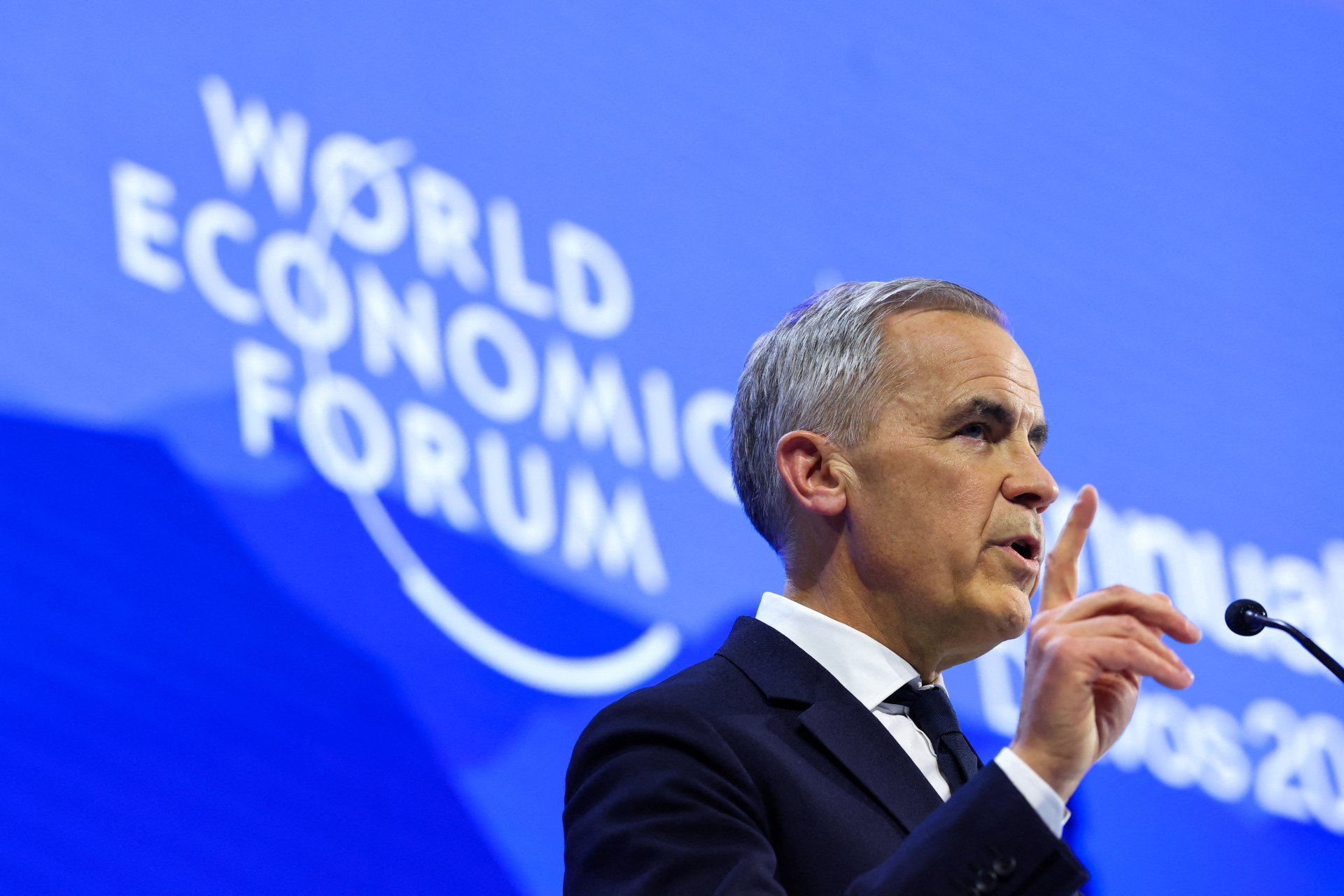
Donald Trump has made hedging hot. His transactional, some would say predatory, approach to foreign policy has many traditional U.S. friends, partners, and allies rethinking their ties with Washington. Canadian Prime Minister Mark Carney manifested their concern at the World Economic Forum last month when he spoke of how allies need to “diversify to hedge against uncertainty” in the face of the “rupture” in the global order triggered by “hegemons” seeking to “monetize their relations.”
The standing ovation that greeted Carney’s speech attests to the desire many countries have to gain “independence” from the United States, as German Chancellor Friedrich Merz put it a year ago. But desires often do not translate into deeds. Which raises two sets of questions: Where and how fast will the hedging take place? And will the United States necessarily regret being less relevant to others?
You do not need to have taken a graduate course in international relations theory to understand why many traditional U.S. friends, partners, and allies want to lessen their dependence on the United States. Trump’s unsentimental and often hostile foreign policy has transformed their deep ties to the United States, long seen as a source of strength, into a vulnerability. As the Belgian Prime Minister has put it: “Being a happy vassal is one thing. Being a miserable slave is another.” When friends cease to be friendly, the wise look for new friends.
The Push to Hedge
The talk about hedging—or “de-risking” if you prefer—is not idle chatter. Carney traveled to China last month to try to unstick Sino-Canadian trade relations that had become frozen after Ottawa supported the Biden administration’s tough line toward Beijing. No sooner had Carney departed than British Prime Minister Keir Starmer arrived seeking to ink new trade deals of his own. Nor has the action just been in China. Since the start of the year, the European Union has struck major trade deals with the four Mercosur countries–Argentina, Brazil, Paraguay and Uruguay—and with India.
Hedging is happening on the security front as well. Carney has moved to increase Canadian defense spending in response to Trump’s pressure to meet NATO spending targets. But yesterday Canada announced that it will prioritize domestic arms purchases and rely less on U.S. weapons manufacturers. Ottawa is also considering whether to revisit its 2023 decision to buy eighty-eight F-35 fighter jets from the United States.
Europe is similarly working to increase its defense spending while reducing its reliance on U.S.-made weapons. This has led to efforts to revitalize Europe’s defense industrial base, encourage joint purchases of military equipment, and increase the capability to act without U.S. support. According to Merz, Europe is even discussing the possibility of a shared nuclear umbrella to supplement if not replace its reliance on the U.S. security guarantee. Polish President Karol Nawrocki is openly discussing Poland potentially acquiring its own nuclear weapons.
Trump has largely dismissed efforts aimed at economic hedging. Indeed, he initially applauded Carney’s outreach to China, saying: “That’s what he should be doing. I mean, it’s a good thing for him to sign a trade deal. If you can get a deal with China, you should do that.”
Trump’s theory of the case on economics is that the U.S. market is so large, the role of the dollar is so dominant, and U.S. technology so appealing that allies cannot escape the gravitational pull of the United States, no matter how much they try. Conversely, Trump has applauded allied plans to spend more on defense as vindicating his unsentimental foreign policy and creating new market opportunities for U.S. defense contractors. In short, for Trump, all roads lead back to the United States.
The Difficulties in Hedging
In the short term, Trump is likely right. Economic ties developed over decades cannot be unwound overnight, as the United States has discovered with its own efforts to de-couple from China. Profitable markets and expensive investments are hard to walk away from. Despite longstanding predictions of the dollar’s imminent demise, it remains the world’s primary currency for international financial transactions.
Alternative suppliers also present problems of their own. China would happily replace the United States as a trade partner, but U.S. allies have good reason to fear Beijing’s predatory trade practices. Moreover, at least for now, Beijing does not appear interested in negotiating sweetheart deals. The main concession Carney extracted during his visit was lower tariffs on Canadian canola oil. Starmer got Beijing to cut duties on imported British whiskey in half. Neither concession qualifies as an economic game changer, and both came at a price. Carney opened Canada’s auto market to Chinese electric vehicles, and Starmer dropped his opposition to a new Chinese embassy in central London that critics say will make it easier for China to spy.
Far-reaching trade deals are hard to negotiate even when competing security concerns are absent. The EU-India trade came about only after the EU scaled back its ambitions. Big trade deals can also be hard to implement. The EU-Mercosur trade deal has stalled in the European Parliament because of the opposition of agricultural groups.
The deep dependence that many U.S. allies have on U.S. technology makes de-risking a daunting prospect. Europe in particular has fallen far behind the United States (and China as well) on the technology front. Reversing that dependency will take years and require far-reaching regulatory changes, substantial investments, talent development, and close cooperation among governments that for now, continue to place national interests before EU wide ones.
Similar dynamics operate on the security front. Europe’s atrophied defense industrial base will not be able to satisfy internal demand for years. Neither China nor Russia are acceptable alternate suppliers. That leaves U.S. defense contractors as the main source of supply for many military needs. Last spring, for example, Portugal ruled out buying American F-35 fighter jets because of doubts about the reliability of the United States as a supplier. By year’s end, however, Portugal had reversed course and moved ahead with its F-35 purchases. Even as Canada weighs the future of its own F-35 purchases, it has kept its options open by paying for the long lead-time components needed in the plane’s construction.
The lesson here is that hedging is hard. The deeper a country’s ties to the United States, the harder it is to hedge. On that score, Canada and Mexico face the toughest road of all U.S. allies. For more than three decades, both countries have consciously deepened their integration into the U.S. economy. That strategy made both countries wealthier, but it also left them more vulnerable to U.S. economic coercion. Today, roughly 75 percent of Canadian exports and 80 percent of Mexican exports go to the United States. In contrast, 15 percent of U.S. exports go to Canada and 17 percent to Mexico. Those disparities give Washington immense leverage to punish Ottawa and Mexico City as they seek to develop alternative markets. Indeed, Trump has now threatened Canada with fresh tariffs if Carney strikes a trade deal with China.
European countries face a similar dilemma on the security front. They are committed to rebuilding their defense industrial base. However, they also need Washington’s cooperation on Ukraine among other things. Trump has made it clear that he expects Europe “to be purchasing hundreds of billions of dollars-worth of military equipment” from U.S. defense contractors. As a result, buying home-grown weapons to revive Europe’s defense industrial base risks antagonizing Trump and jeopardizing U.S. support for Ukraine. That prospect, along with divisions within Europe over whether and how far to hedge against the United States and lingering hopes that Trump’s successor might return to a more traditional U.S. foreign policy, will complicate efforts to create distance from Washington.
Changes Accumulate
That said, the short term eventually gives way to the long term. Small changes that accumulate create major changes with time. And the seething public anger in many allied countries toward Trump will push allied leaders to make hard decisions they might otherwise avoid. Carney won office, for example, largely because Canadians saw him as the leader best able to stand up to Trump’s threats against Canada’s sovereignty. So while allied hedging behavior may not produce major changes in the remaining three years of Trump’s presidency, they may set in motion longer-term changes that profoundly affect U.S. interests.
This is perhaps easiest to see on the economic front. Upon taking office in 2017, Trump withdrew the United States from the Trans-Pacific Partnership (TPP), the trade initiative that President Barack Obama championed to provide a counterweight to China’s growing economic and political influence. Trump expected the agreement to collapse without U.S. involvement. Instead, the other eleven TPP parties created the Comprehensive and Progressive Trans-Pacific Partnership (CPTPP). With the addition of the United Kingdom last year, CPTPP covers roughly 15 percent of world trade. That number is likely to grow. China, Indonesia, the Philippines, Taiwan, and the United Arab Emirates are among the countries that have applied to join. As CPTPP expands, U.S. exporters could easily find themselves less competitive in overseas markets.
The “they-can’t-do-it-without-us” argument could also age badly on the security front as well. Europe’s efforts to rebuild its defense industrial base will be turbulent, but it can be done. Trump would no doubt claim victory for pushing Europe to stand on its own two feet. But that victory would come at a cost. Fewer European purchases of U.S. military hardware mean higher defense costs for the United States and fewer defense-related jobs for American workers as U.S. defense contractors see their customer base shrink.
At the same time, much of the talk about pushing Europe to do more rests on the questionable assumption that a more capable Europe will continue to follow Washington’s lead on foreign policy. But a Europe that stands on its own two feet will also be a Europe that has more flexibility to say “no” to the United States. This will be all the more so as new generations come of age seeing the United States not as a savior but as a threat. Much like not noticing oxygen until it’s gone, the United States could discover that its ability to project power abroad, as well as its ability to protect itself at home, has long rested on Europe’s willingness to provide bases, overflight permission, and intelligence cooperation. Those assets may no longer be forthcoming.
Looking Ahead
Perhaps none of this will come to pass, and years from now doctoral students will be turning out dissertations explaining how Trump’s “Art of the Deal” restored U.S. global primacy. China may pursue ham-handed policies that make Trump’s shine in comparison. Europe may discover that it has neither the will nor the wallet to leverage its strengths into standing up to the United States, no matter how much strategists urge them to. The financial and technological strengths of the United States may prove more resilient and more appealing than skeptics assume. Or Trump might succeed in exploiting divisions in allied ranks to derail allied hedging efforts.
But the better bet is that the United States will come to regret its predatory turn toward its allies. As Merz noted last week at the Munich Security Conference, “In the era of great power rivalry, even the United States will not be powerful enough to go it alone.” As the adage has it, strength lies in numbers. If the United States finds itself in the future with fewer and far less committed friends, it will have no one but itself to blame.
Oscar Berry assisted in the preparation of this post.